Advanced Photonics &
Optoelectronics Lab

Publications

Our work in photonics, optoelectronics, and beyond.

86 publications · 2015–2026
† First author · * Corresponding author
Underlined · APOL student authors (including alumni)

2023

56

Parabolic Mirror-Assisted Thermoelectric and Radiative Cooling System for Maximizing Power Generation Utilizing Solar and Outer Space Thermodynamic Resources

I. H. Jeong†, S. W. Park†, M. S. Kim, J. T. Kim, and G. J. Lee*

Adv. Mater. Interfaces 10, 22, 2300573 (2023)

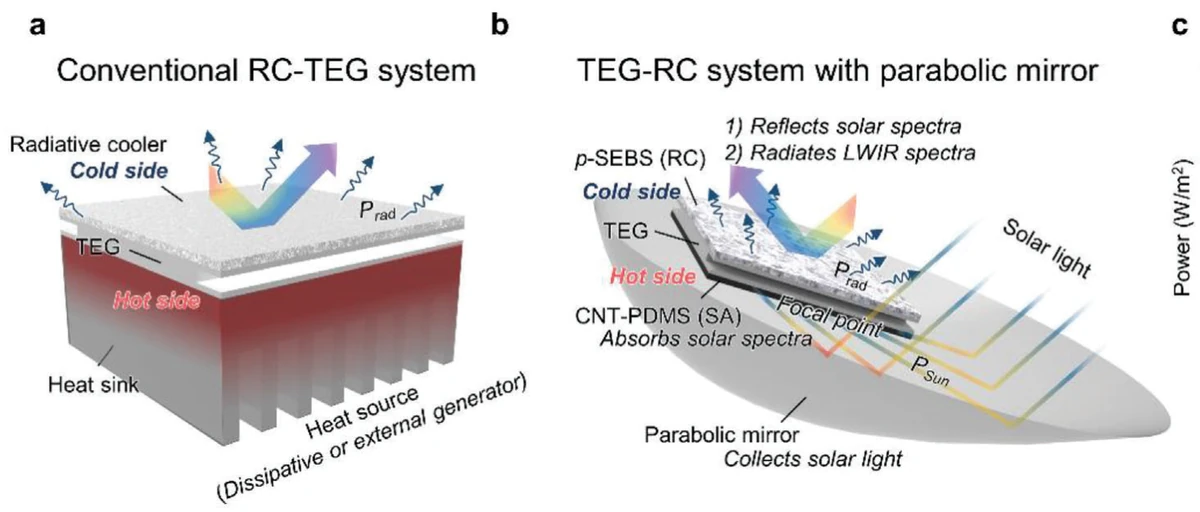
A thermoelectric-radiative cooling system that uses both the Sun and outer space. A parabolic mirror focuses sunlight onto a solar absorber on the hot side of a thermoelectric generator, while a radiative cooler chills the cold side. Optimizing the cooler-to-absorber size ratio and the number of stacks yields high daytime power output.

Figure adapted from Adv. Mater. Interfaces (2023), CC BY 4.0.
↗
55

Scalable, Patternable Glass-Infiltrated Ceramic Radiative Coolers for Energy-Saving Architectural Applications

S. K. Jeon†, J. T. Kim†, M. S. Kim, I. S. Kim, S. J. Park, H. Jeong*, G. J. Lee*, and Y. J. Kim*

Adv. Sci. 10, 27, 2302701 (2023) JCR < 10%

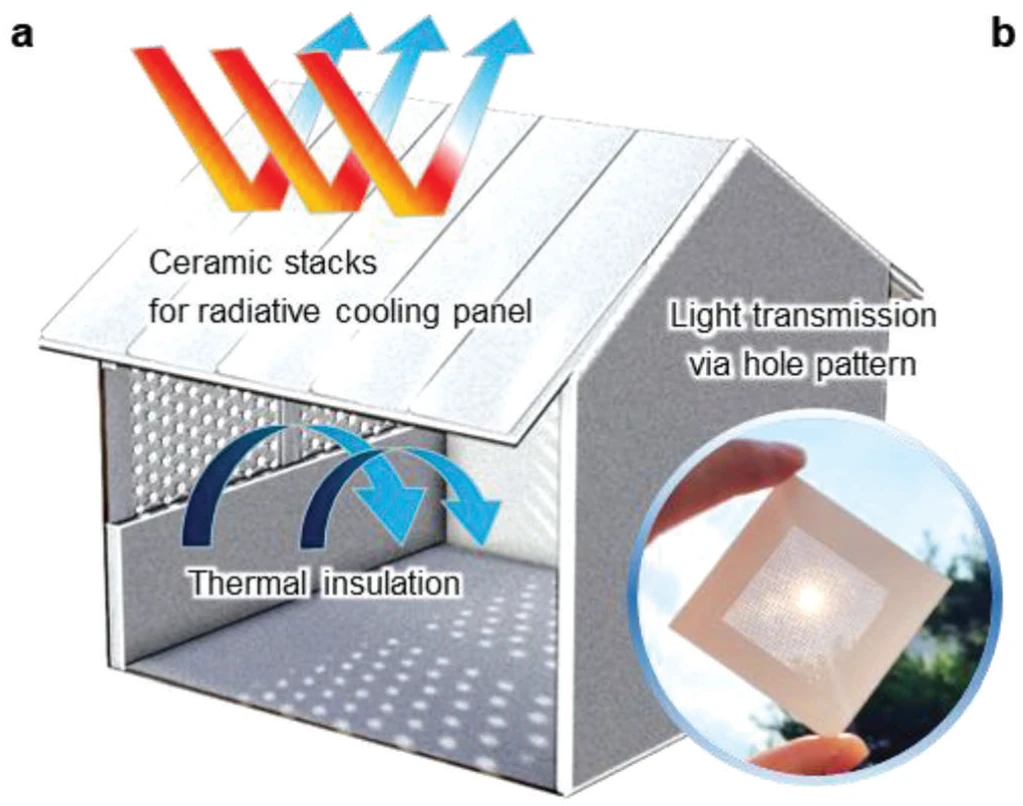
A scalable, patternable ceramic radiative cooler made by a roll-to-roll process. Alternating porous alumina and borosilicate glass layers give about 96% solar reflectance, 92% thermal emissivity and low thermal conductivity with flame resistance, while glass infiltration prevents shrinkage so the designed spectra survive fabrication for energy-saving buildings.

Figure adapted from Adv. Sci. (2023), CC BY 4.0.

↗
54

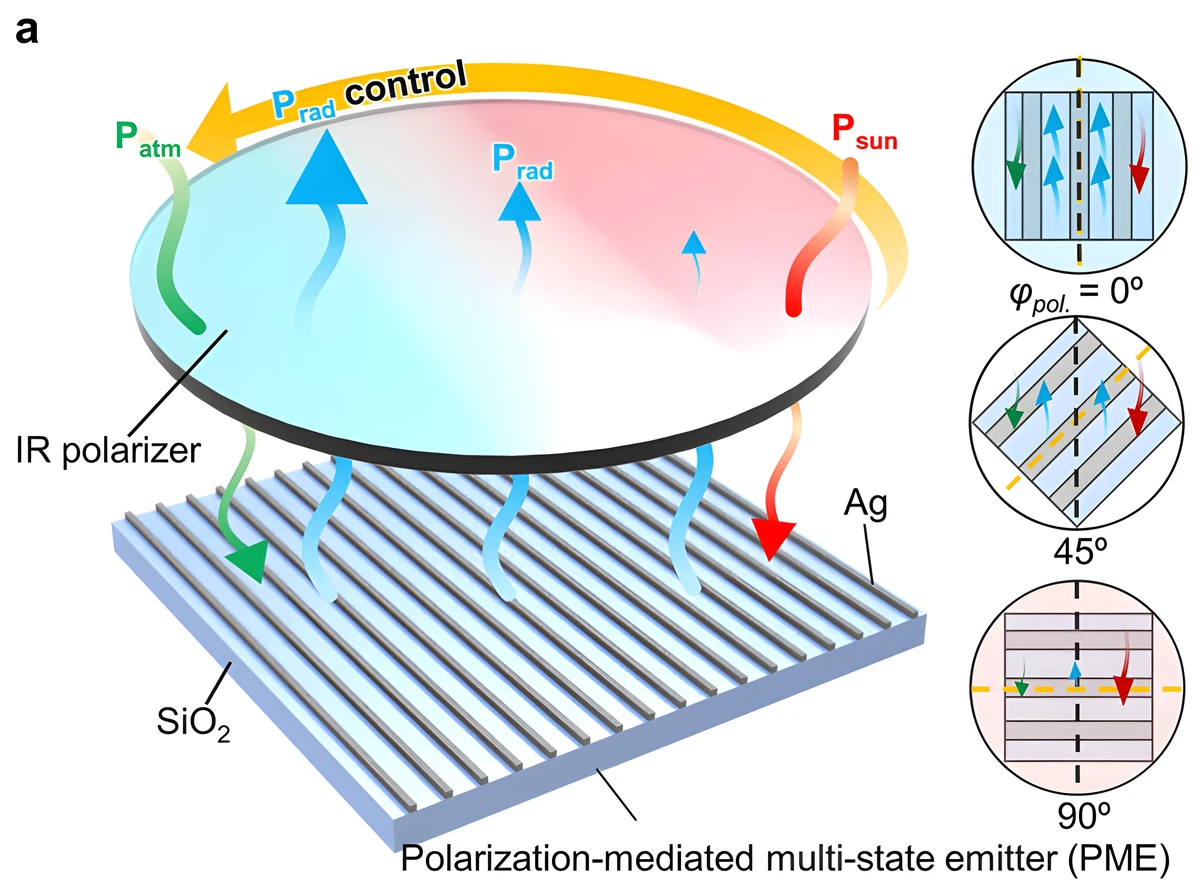
Polarization-mediated multi-state infrared system for fine temperature regulation

D. H. Kim S.-Y. Heo, Y.-W. Oh, S. Jung, M. H. Kang, I.-S. Kang*, G. J. Lee*, and Y. M. Song*

APL Photonics 8, 030801 (2023)

A continuous temperature-regulation system that uses an infrared polarizer as an energy valve. Rotating the polarizer over a polarization-dependent emitter tunes heating and cooling from −17 to 51 W m−2, saving more than 20 GJ per year over conventional emitters across climate zones, with precise temperature control shown outdoors.

Figure adapted from APL Photonics (2023), CC BY 4.0.

↗
53

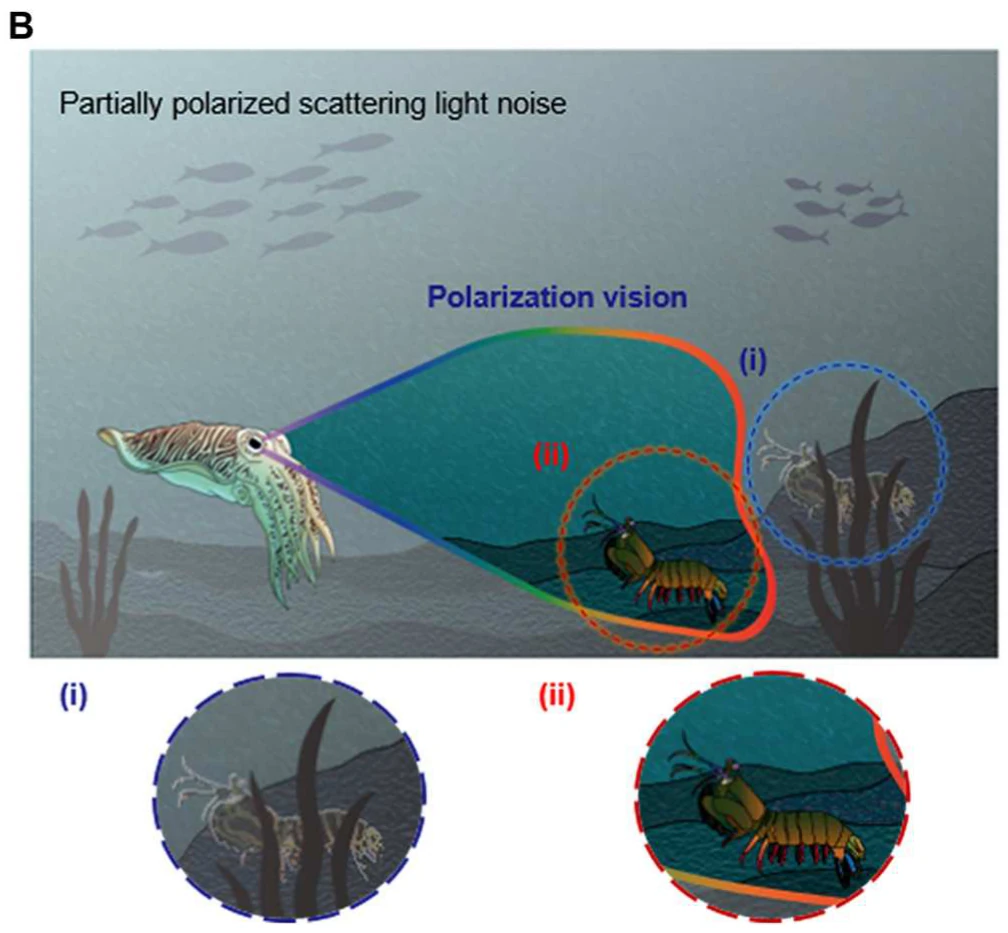
Cuttlefish eye–inspired artificial vision for high-quality imaging under uneven illumination conditions

M. Kim†, S. Chang†, M. Kim†, J.-E. Yeo, M. S. Kim, G. J. Lee*, D.-H. Kim*, and Y. M. Song*

Sci. Robot. 8, 75, ade4698 (2023) JCR 1%

An artificial vision system inspired by the cuttlefish eye for imaging under vertically uneven lighting. A W-shaped pupil on a ball lens balances bright and dark regions, while a flexible polarizer and a cylindrical silicon photodiode array with locally dense pixels improve contrast and acuity, aiding object detection for vehicles and drones.

Figure adapted from Sci. Robot. (2023) © AAAS.

↗
52

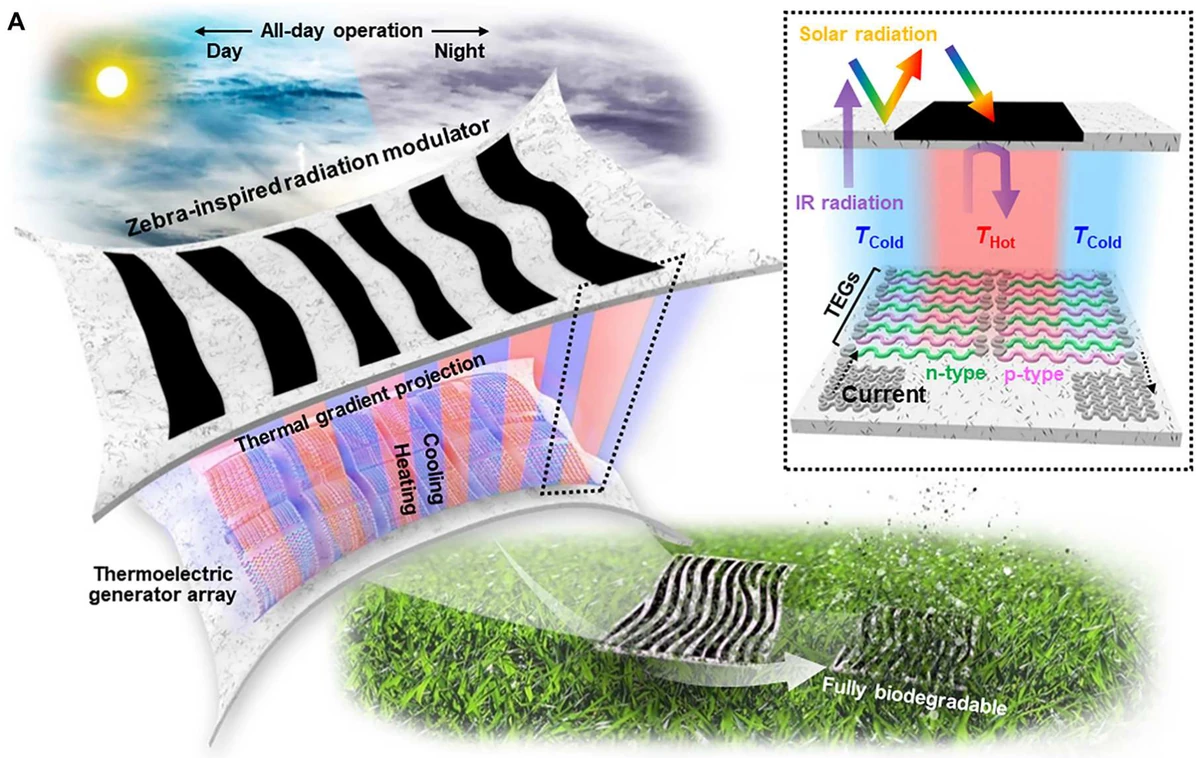
Zebra-inspired stretchable, biodegradable radiation modulator for all-day sustainable energy harvesters

W. B. Han†, S.-Y. Heo†, D. Kim†, S. M. Yang, G.-J. Ko, G. J. Lee, D.-J. Kim, K. Rajaram, J. H. Lee, J.-W. Shin, T.-M. Jang, S. Han, H. Kang, J. H. Lim, D. H. Kim, S. H. Kim, Y. M. Song, and S.-W. Hwang

Sci. Adv. 9, 5, adf5883 (2023) JCR < 10%

A stretchable, fully biodegradable radiation modulator patterned like zebra stripes. Alternating radiative cooling and heating regions create a large in-plane temperature gradient that drives thermoelectric generators throughout the day and night, the performance holds under mechanical strain, and the whole system eventually dissolves under physiological conditions after use, offering sustainable energy harvesting.

Figure adapted from Sci. Adv. (2023) © AAAS.

↗
51

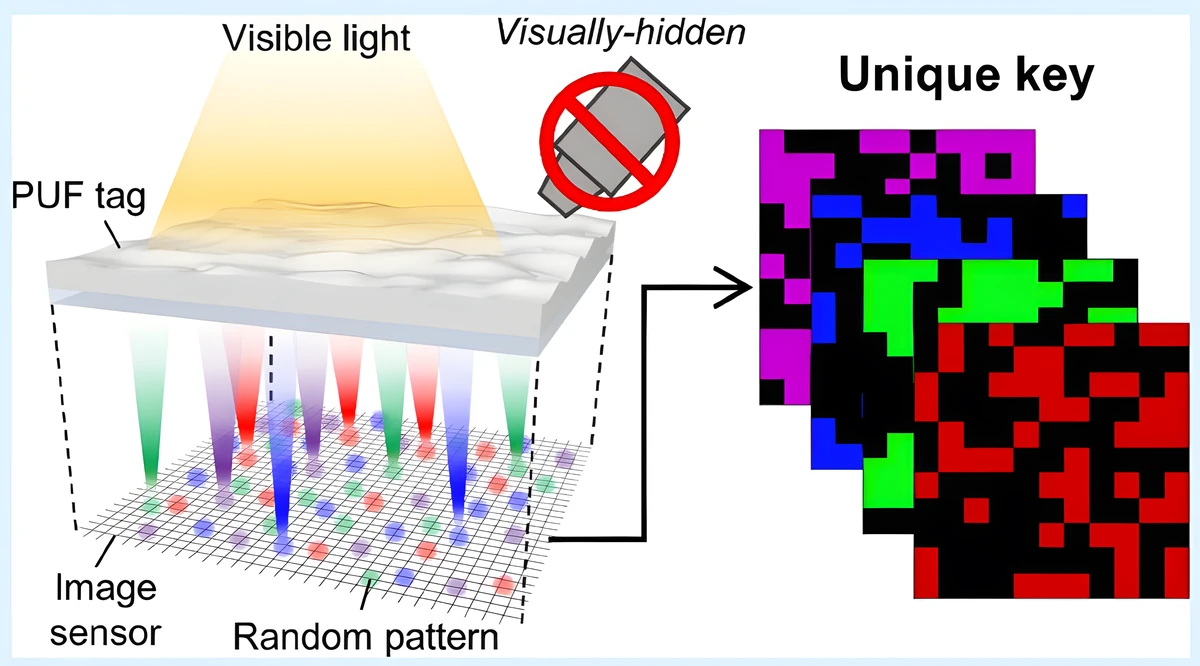
Visually Hidden, Self-Assembled Porous Polymers for Optical Physically Unclonable Functions

M. S. Kim and G. J. Lee*

ACS Appl. Mater. Interfaces, 15, 3, 4477-4486 (2023)

A visually hidden, self-assembled porous polymer as an optical physical unclonable function tag. A saturated outer surface hides an internal porous layer that produces random, wavelength-dependent Mie scattering, enabling a lens-free, compact PUF made simply by spin coating and annealing, with unique and reproducible optical responses.

Figure adapted from ACS Appl. Mater. Interfaces (2023) © American Chemical Society.

↗