Advanced Photonics &
Optoelectronics Lab

Publications

Our work in photonics, optoelectronics, and beyond.

86 publications · 2015–2026
† First author · * Corresponding author
Underlined · APOL student authors (including alumni)

2026

86

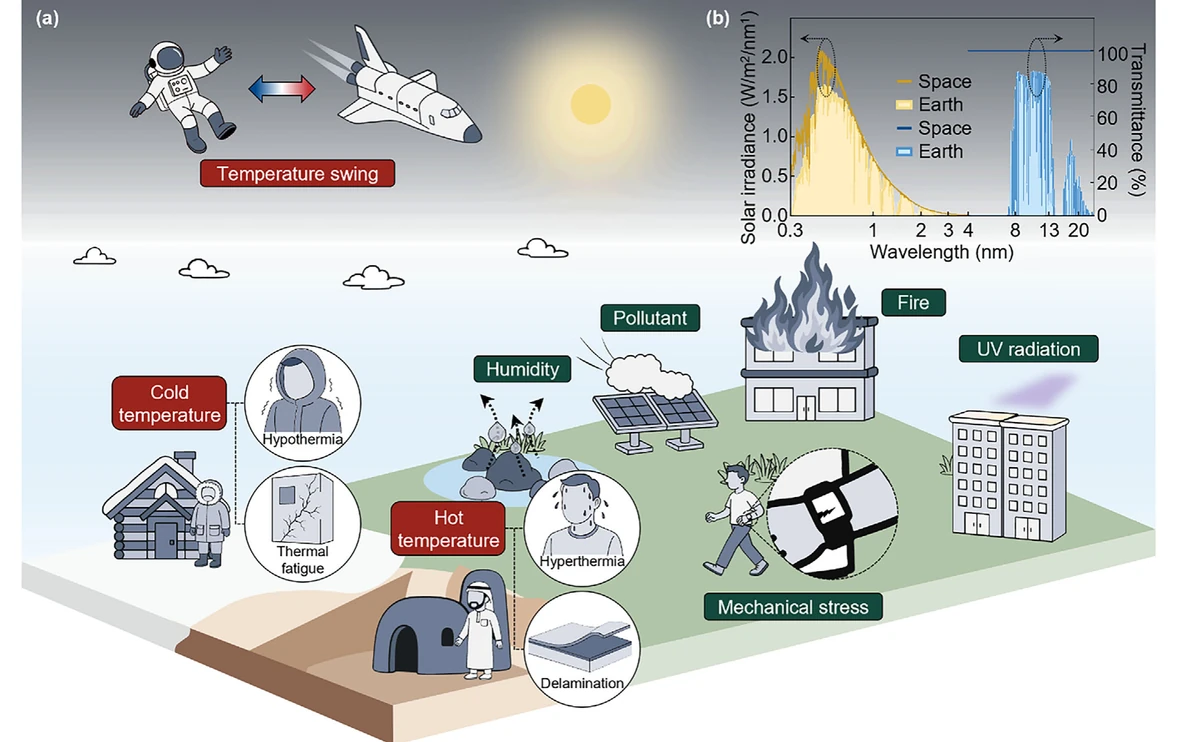
Radiative Thermal Management for Extreme Environments: Mechanisms and Design Strategies

H. R. Kim, H. Kim, J. H. Ko, G. J. Lee*, D.-H. Kim*, and Y. M. Song*

Adv. Mater., e75108 (2026) JCR < 5%

A review of radiative thermal management—radiative cooling and solar heating—for extreme conditions. It covers the underlying physics and material and structural design, hybrid schemes that couple radiation with conduction, insulation, phase-change and evaporative cooling, dual-mode strategies, and environment-adaptive features such as self-cleaning, UV and fire resistance.

Figure adapted from Adv. Mater. 2026, e75108 (CC BY 4.0).
↗
85

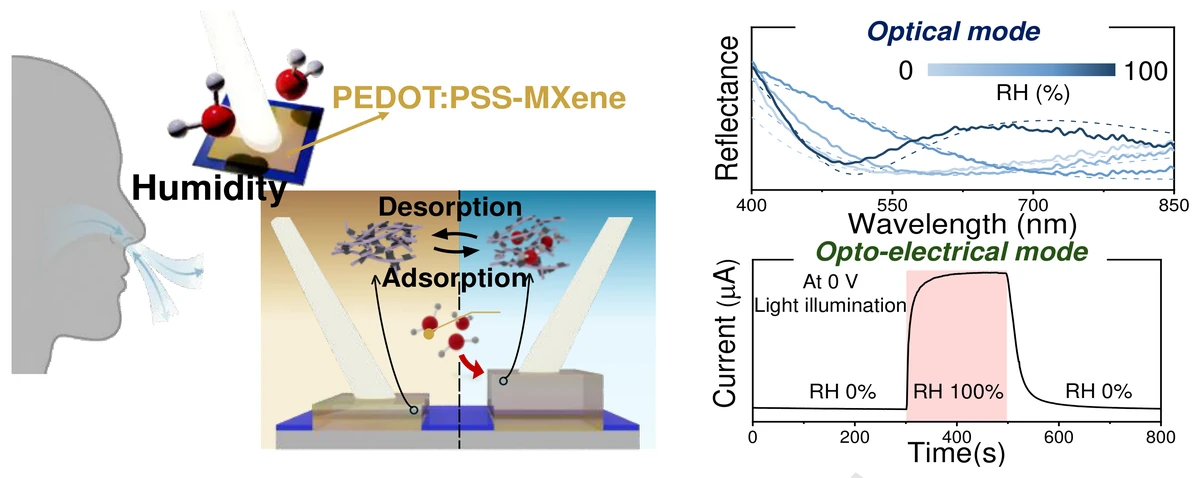
Light-assisted PEDOT:PSS-Ti3C2Tx hybrid sensor for dual optical-electrical humidity detection

H. Choi†, J. M. Im†, D. H. Park†, A. Gupta†, S. Nahm, Y. Han, Y. I. Park*, G. J. Lee*, and H. Kim*

Chem. Eng. J., 182604 (2026) JCR < 3%

A PEDOT:PSS–Ti3C2Tx hybrid film on n-Si reads humidity through two channels at once. Swelling of the film shifts thin-film interference, changing reflectance and color, while the heterojunction converts light into zero-bias photocurrent. The optimized device reaches a 331.9% response at 100% RH and tracks human breathing up to 24 breaths per minute.

Graphical abstract from Chem. Eng. J. 2026, 182604 © Elsevier.

↗
84

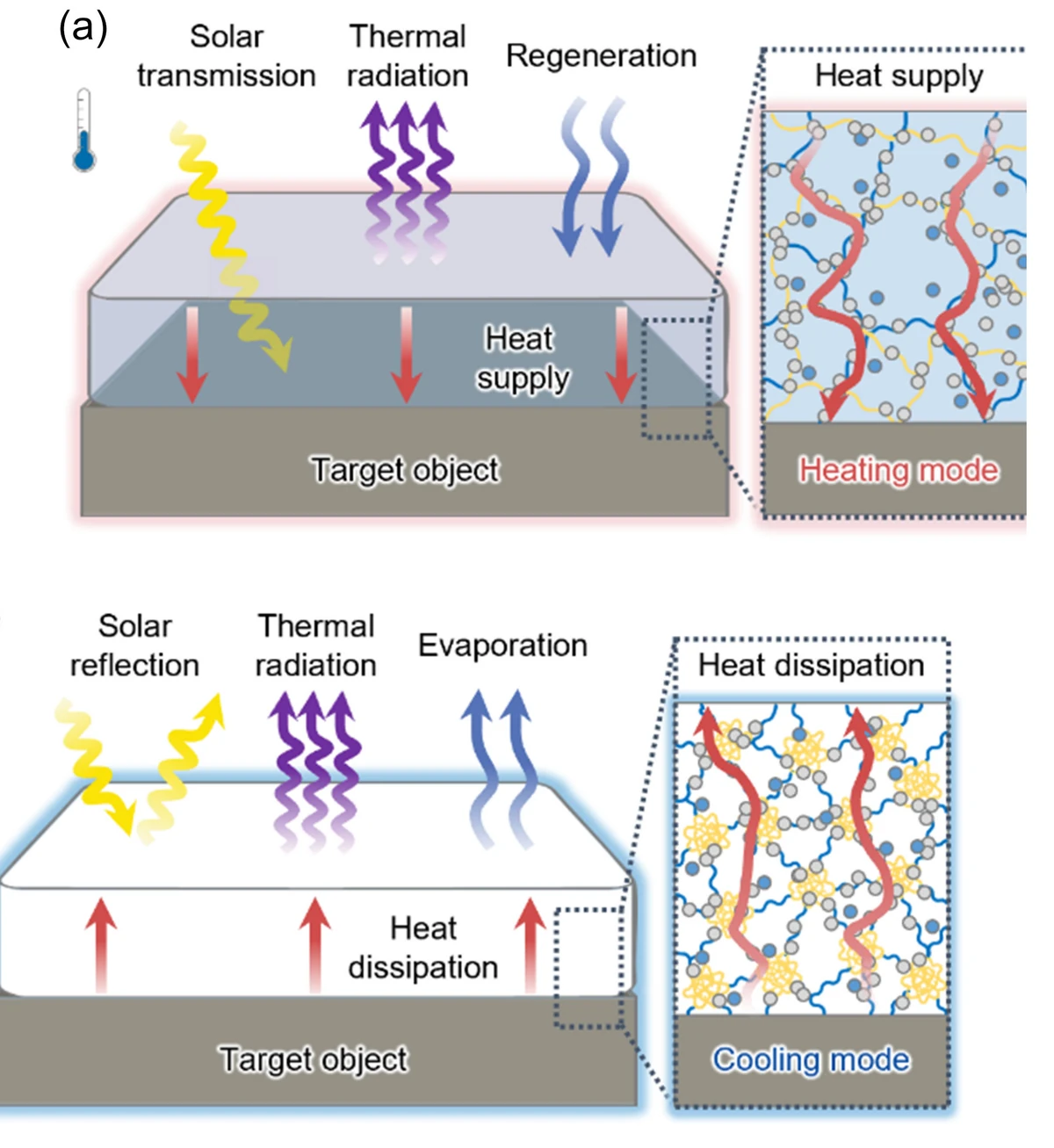
Thermal Transport Engineering in an Adaptive Latent-Radiative Hydrogel Thermostat

H. Kwak†, M. J. Hong†, S. Lee†, H. R. Kim, Y. M. Song*, and G. J. Lee*

Small Struct., 7, 10, e70636 (2026)

Latent-radiative hydrogel thermostats switch passively between heating and cooling, but low thermal conductivity limits heat flow from the source. Adding CaF2 particles—visibly transparent, index-matched and thermally conductive—raises conductivity by 13% while keeping high infrared emittance, temperature-dependent solar reflectance and moisture regulation, improving outdoor temperature control.

Figure adapted from Small Struct. 2026, 7, e70636 (CC BY 4.0).

↗
83

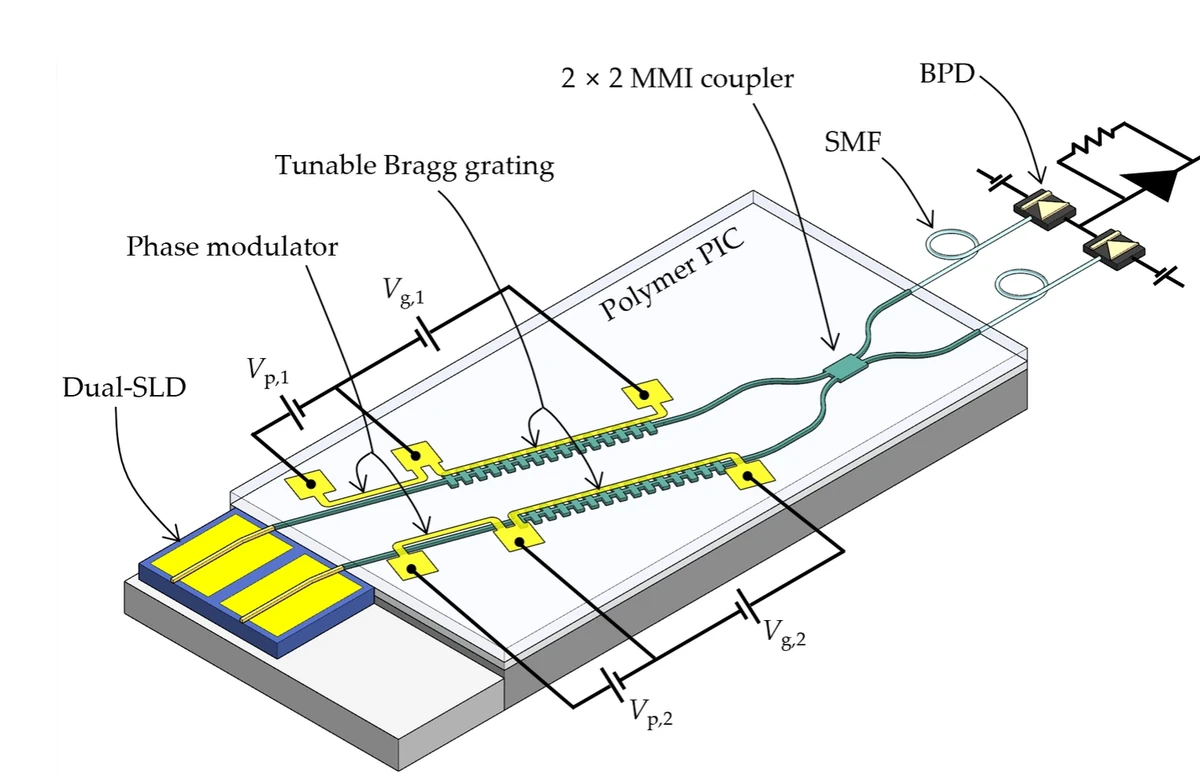
Dual-Wavelength External Cavity Lasers Using Polymer Photonic Integrated Circuits for Optical Heterodyne RF Signal Generation

K.-W. Chun, E.-S. Lee, J. Jin, H. Kim, G. J. Lee, S. Kim, and M.-C. Oh*

Photonics 13, 9, 871 (2026)

A dual-wavelength external cavity laser built on a fluorinated-polyimide photonic integrated circuit, with Bragg gratings, thermo-optic phase shifters and a multimode interference coupler on one chip. The polymer’s strong thermo-optic effect enables wide, continuous tuning, and heterodyning the two lines generates RF signals tunable up to the 40 GHz measurement limit.

Figure reproduced from Photonics 2026, 13, 871 (CC BY 4.0).

↗
82

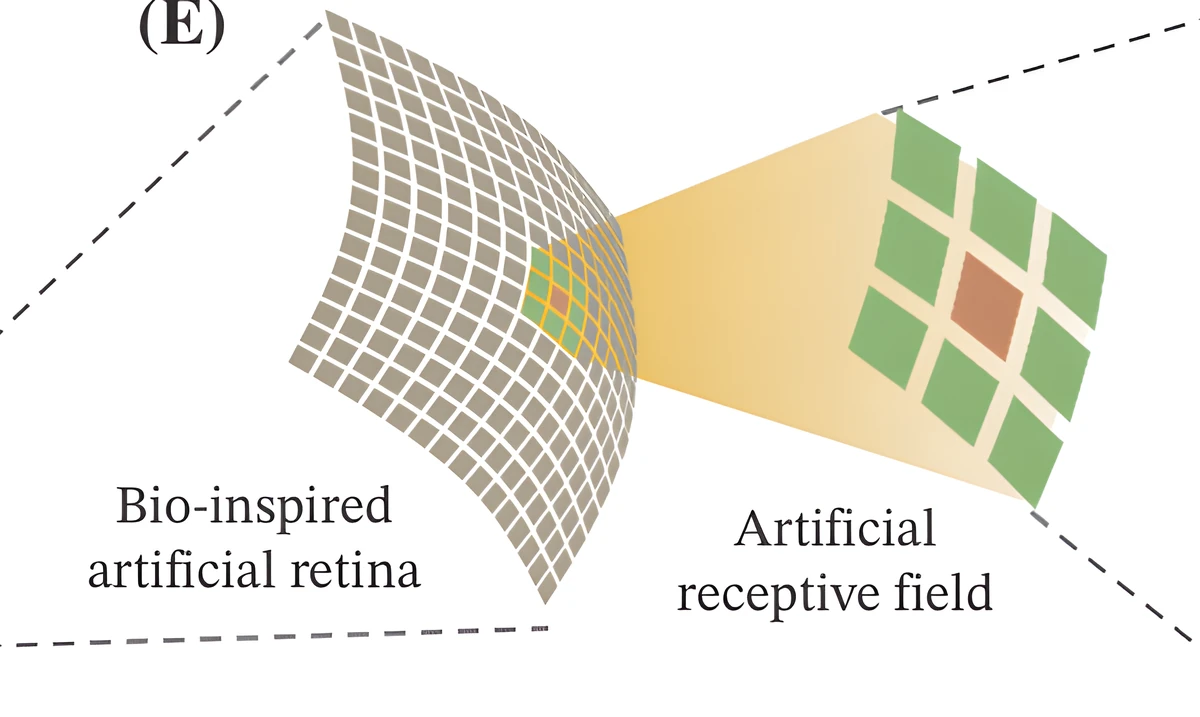
Bio-inspired artificial retina with receptive fields for in-sensor multiply-and-accumulate operations

J. Ha, J. Mok, J. I. Kwon, E. Yeon, J. J. Kim, G. J. Lee, D. K. Hwang, C. Choi*, and D.-H. Kim*

InfoMat 8, 8, e70156 (2026)

An artificial retina of curved perovskite photoconductors that mimics both the single-lens geometry of the human eye and the receptive fields of biological retinas. Each artificial receptive field performs multiply-and-accumulate operations inside the sensor, producing edge images without post-processing and making semantic segmentation faster and more energy-efficient for robotic vision.

Figure adapted from InfoMat 2026, 8, e70156 (CC BY 4.0).

↗
81

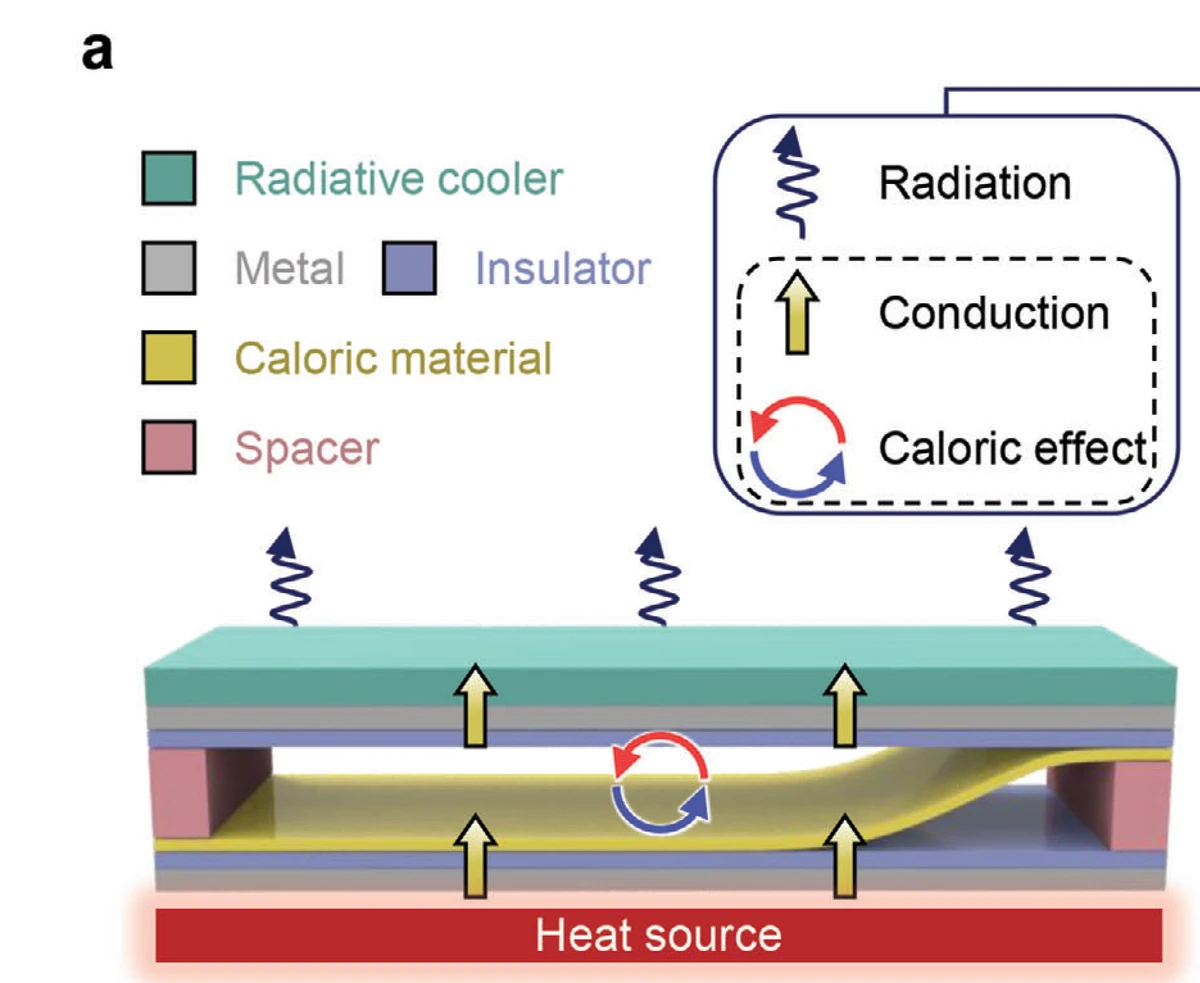
Harnessing Outer Space for Improved Electrocaloric Cooling

D. H. Seo†, H. R. Kim†, J. H. Yun, H. Kwak, D. H. Kim, S.-Y. Heo, R. Ma, G. J. Lee*, and Y. M. Song*

Adv. Funct. Mater., 36, 6, 2419891 (2026) JCR < 10%

Electrocaloric coolers are limited by how quickly they can shed heat. Pairing the device with a thermally conductive radiative cooler (1.1 W m−1 K−1, ~96% solar reflectance, ~95% atmospheric-window emissivity) sends heat to outer space, adding 87 W m−2 of cooling and outperforming metal heat sinks under strong heat loads.

Figure adapted from Adv. Funct. Mater. 2026, 36, 2419891 (CC BY 4.0).

↗
80

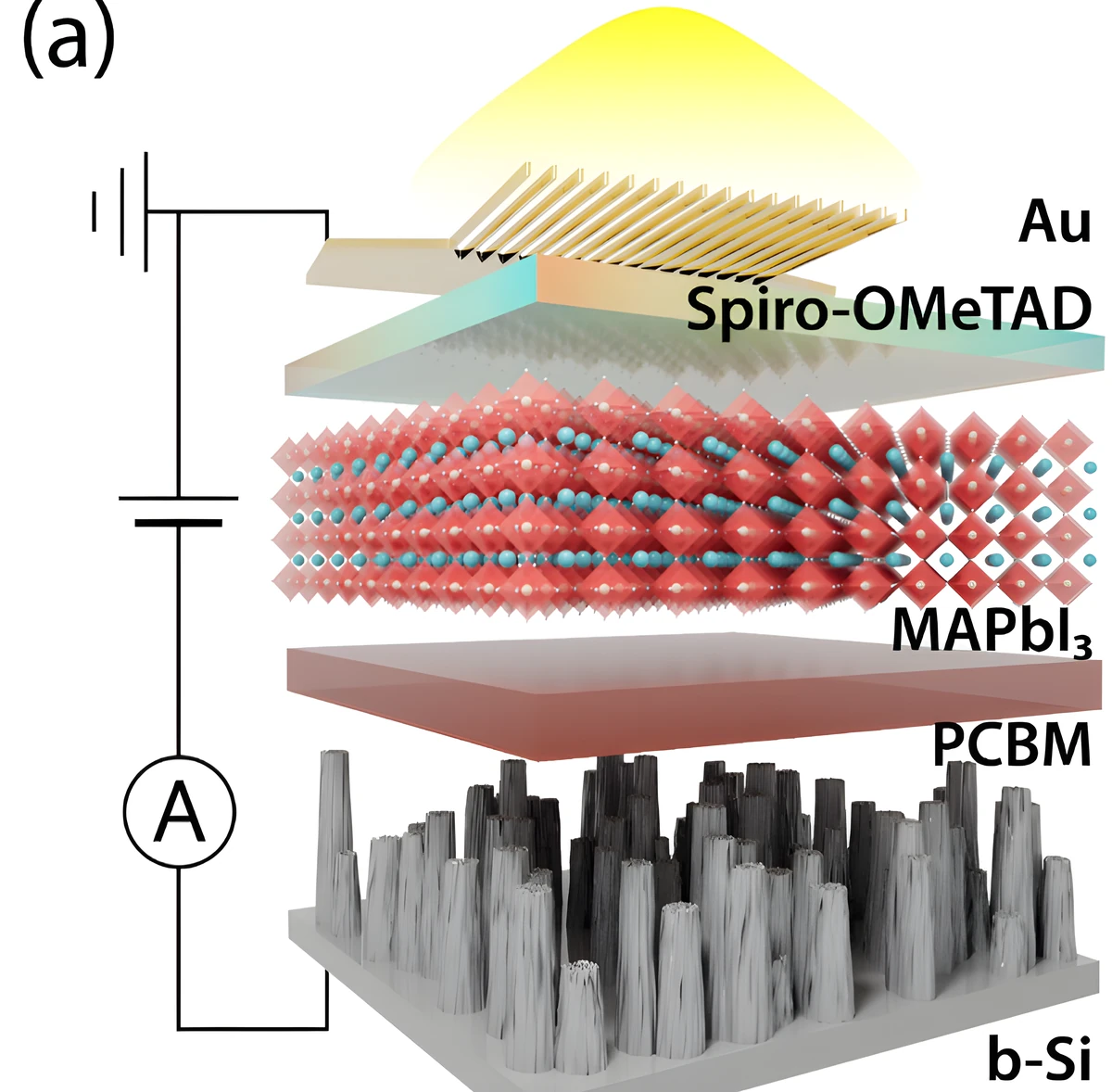
Low-bias, broadband photodetection enabled by MAPbI3/black silicon dual-mode photodetector for compact optoelectronic platforms

J. Sung†, M. S. Kim†, H. Lee, G. J. Lee*, H. Kim*, and S. Kwon*

Chem. Eng. J., 527, 171589 (2026) JCR < 3%

A back-to-back perovskite photodetector built on black silicon made by metal-assisted chemical etching. The vertical nanostructures suppress reflection and shorten carrier paths through the resistive perovskite layer, so charges are collected at lower bias. The device separates wavelengths better and responds more strongly than earlier back-to-back designs, suiting compact spectral sensors.

Figure adapted from Chem. Eng. J. 2026, 527, 171589 © Elsevier.

↗